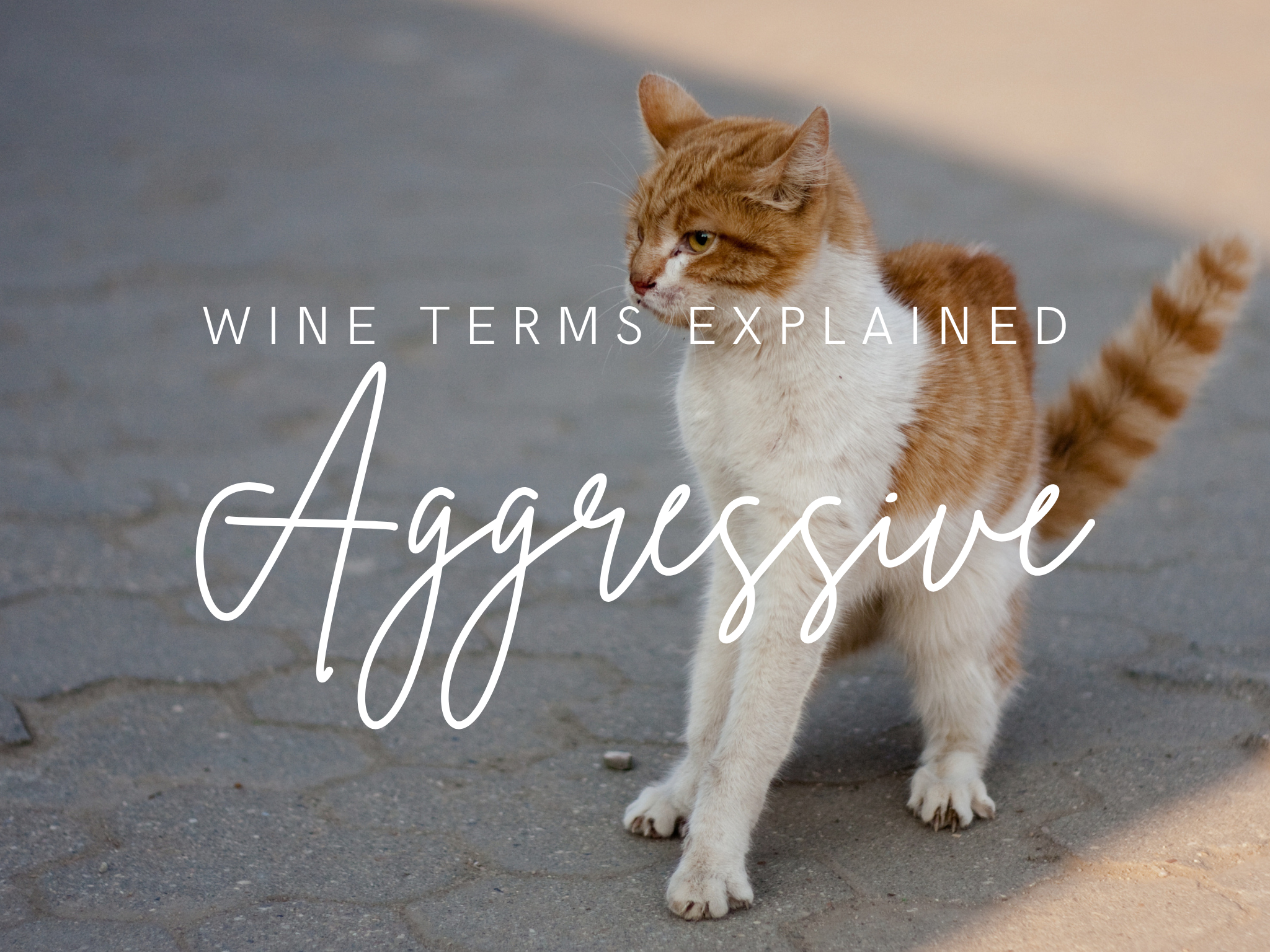
There are some weird wine terms out there that don’t always make a lot of sense. Unless you know what they mean, how are you meant to understand wine tasting notes? In Wine Terms Explained, we unpack some of these weird wine terms so that you know what they mean, and you can get back to enjoying wine. In this article, we’ll unpack the question: what is an aggressive wine?
It seems weird to call a wine aggressive given that it doesn’t really have any emotions. It is a beverage after all. But aggressive is one of the many wine terms used to describe a wine. So let’s dive into what it really means.
What does aggressive mean in wine?
Aggressive is a term used to describe the taste or texture of a wine. Rather than being about the fruit notes in the wine, it’s generally more to do with the balance of components within the wine.
Each wine needs a good balance between acidity, tannin and alcohol content. If one element is out of whack, the wine won’t taste as good as it could. For example, a wine with an alcohol content that isn’t balanced out by acidity will taste flabby, whilst too much acidity can make a wine unpleasant to drink.
Why is a wine called aggressive?
When a wine is aggressive, it’s usually too high in acidity or tannins. With really high acidity or hard tannins, the wine will have a harsh taste or texture. The flavour is biting and tends to be unpleasant.
So having an aggressive wine isn’t really a good thing. Which makes sense when you think about it!
Is it a bad sign?
There aren’t any particular varieties that are more likely to be aggressive, as a winemaker will try to avoid this in their winemaking. So if you ever hear a wine described as aggressive, it’s best to avoid it if you can!